Wednesday, March 07, 2007

Tanzanian Tales V: Home & Garden Safari I

Home and Garden Safari I

I’ve been threatening to write about my on-going garden safari for ages now. The reason that I haven’t produced said document is because it is a rather more ambitious project than I first imagined. Having given up on producing it all at once, this will be the first of many chapters. I dedicate this series to the memory of my Grandma who’s constant curiosity and wonder at the world around her will always inspire me.

“Safari” is a KiSwahili word meaning “to travel.” When you are about to embark on a journey people wish you “safari njema” meaning “travel well or safely.” When you return from your journey people ask “habari safari?” which literally translates as “what is the news from your journey?” The polite answer to this is “mazuri sana, habari yako?” which means “very good, what is your news?”

When we go on a safari as it is more widely understood, we generally travel into a protected African wilderness. Upon entry into these wilderness areas, we are given or buy or find in the guidebooks that have brought us to these places, a list of the birds, animals, bugs, reptiles and even sometimes plants and rocks that the wilderness area provides homes for. As tourists we find ourselves scanning these lists and ticking off the birds and animals we see. Sometimes we mark with a star those that we enjoyed the most or got good pictures of. I find myself wondering what the African guides who first saw tourists frantically ticking away thought of our headlong antics. Of course by the time I’ve visited any of these areas, the guides (when we’ve used their services) have been well used to our ways and have consulted the lists themselves in planning and prioritizing where to take us to make sure we got to tick as many as possible – thereby maximizing their tips.

Having spent my formative years in a Northern Hemisphere climate where winter has a significant limiting effect on the lengths to which life can grow, I consider the adventure of housekeeping in the Tropics a journey in discovery and wonder at the amazing variety and size that life can take. From a North American perspective, when Africa is not about chaos and poverty, it is about the incredible environments and ecology found here. It is no coincidence that questions about the animal and plant life are those that most frequently come up when people in Canada ask me what it is like to live in the African bush.

All this is to explain the inspiration behind what will hopefully become a series of pictures and words. Since I’ve been living and working in African countries, I’ve been collecting pictures of the plants, animals, bugs and birds that populate my home and garden. That is not to say that our homes and gardens in wintery places are not also places full of wonder and discovery. However, the sheer abundance and tenacity of life inside and outside my homes in Africa has in turns excited, revolted, terrified and mostly just simply amazed me. I’ve wanted to share this wonder with people all the way along. The following is an excerpt from my journal to start us all off with a particularly tenacious creepy crawly that we see around once in a while.

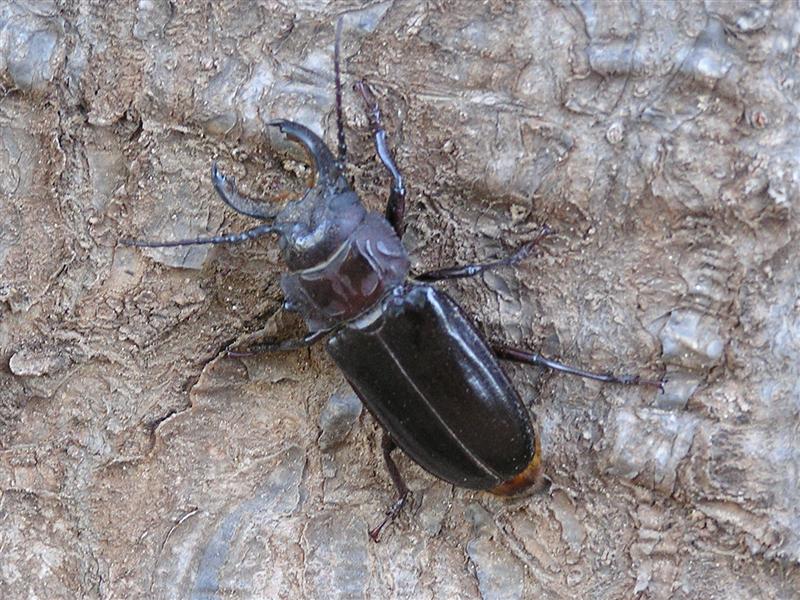
Eye spitter beetles are aptly named because they can secrete and even propel a noxious smelling acidic liquid when they feel threatened. They are member of the carabidae family of insect order coleoptera and can grow to and impressive 6cm long. The one in this picture had obviously seen a few fights given the damage on its shell near the end. Its body was about 5cm long. It may or may not have been the one who met its end in the following excerpt from my journal. The picture was taken in our bathroom a couple nights before the journal entry.

Monday 14 November 2005 21:00, Mwadui

Eulogy to the eye spitter beetle that died sometime today. Last night around this time I was getting ready for bed and discovered, to my horror, a largish specimen of the so called eye spitter beetle hanging on the net over Kobus’ pillow. Given that Kobus was home, I delegated the task of this potentially messy eviction to him. Kobus turned on the naked bulb that serves as the overhead light in our bedroom and chased the monster under the bed. The light, combined with our debate over weather the job was done briefly woke Simon. Reckoning the bug “lost” Kobus adjourned back to the couch while I managed to send Simon quickly back to sleep with some gentle words and a soothing touch.

Having already turned off the offending light I then applied my red maglite torch to the problem. I found the intruder at the foot of the bed still under the net. I asked Kobus to return and remove the beast while I shone the light on it. In his pique at being roused from the couch for the second time in ten minutes, he decided to kill it and selected one of his hunting boots for the task. The net came between the bug and the boot when he thwacked it and its defensive liquid plus whatever other interior innards made an ugly brown stain half the size of my palm on the net plus another stain half the size of the first one. The carcass was allowed to lie where it was thwacked. In the morning I decided that such an awful mess deserved some forensic photography. (Gentle readers: you’ve been spared these shots because none of the pictures represented the situation adequately in my opinion.) As I went about my photographic project, I moved the bug so that I could get shots of the body with the stains in the frame. I was again horrified when I discovered that the poor beast was still alive. I had to call Kobus at work to inform him of my discovery. He said: “well good luck to it.” That being said, I didn’t give it much thought again until I discovered the carcass lying just outside the back door where the maid must have left it when she swept the dirt out of the house this morning. It was completely dead by then and the ubiquitous ants were busily carrying it away tiny piece by ant-bite piece. Somehow such a tenacious beast deserved a couple paragraphs of my time.

Saturday, April 08, 2006

Croc Hunting in Senga Bay Episode #1

The following is the first episode of the Crocodile adventures. It was distributed to the newsletter subscription in June 2004 and I'm re-publishing it here after many promises to do so. Thanks for all the support and encouragement everyone!

As an endangered species, there aren’t too many places in the world where crocodiles can be legally hunted. Malawi is one of those places due to its large stretch of lakeshore that is densely populated with both crocs and people. As a signatory of the Convention on the International Trade of Endangered Species (CITES), Malawi issues 20 highly sought after licenses annually. These licenses split the lakeshore of Malawi’s great lake into roughly even concessions where hunters can collect 20 crocs each. The hunters are issued with CITES tags for their trophies which allow them to trade the skins of the beasts they kill on the international market.

Internationally, crocodile skin can command fairly high prices although most of the skins that feed the world’s demand for purses, shoes, wallets and belts come from croc farms. Only the skin of the crocodile’s belly is harvested and traded. The skin is sold by the usable inch of flesh. In fact, wild crocodile skins are usually less valuable than their farmed cousins’ due to the latter’s regulated and sheltered lives and therefore less scarred bellies. Malawi has at least one croc farm that does a very lucrative business. Here, hunting crocodiles is considered a sport and a service to the rural communities that are saved from monsters that prey on people and livestock as well as compete with fishermen for sustenance. Hunting crocs is not a for profit exercise due to the expense of either hiring or owning and maintaining a boat that can take the hunter into croc territory and the low-ish odds of finding and killing a beast in the course of any given sortie.

This reporter’s short study has yielded the observation that writing on hunters and hunting comes in two distinct varieties with little or nothing in between. Hunters write about their successful hunts and the adventure, techniques and tools that led to success in their fields. Anti-hunting campaigners write about their disgust with the blood sport, the irresponsibility of (some) hunters and the danger to people and environments caused by hunters running around with guns, not to mention snares and other assorted traps. This is not the place to get into the debates on a global scale. It is a given that in any human undertaking there are those that go about it in an ill-informed, unprincipled, dangerous and/or selfish manner. It is also a given that human communities, especially rural ones, compete for space and resources with animals, their habits and habitats on a bloody day to day basis that leaves many urban citizens a little cold.

The experience of two recent weekends hunting has occasioned some interesting personal reflection on the debates. I hereby share the stories. I’ll put any growing queasiness to rest by stating now that no crocodiles died to bring you this story. A little known fact among non-hunters is that the odds are apparently about even that a hunter might discharge their gun in the direction of dangerous game on any given hunting sortie. Apparently, the appallingly low odds that something might actually be killed are an important motivator for otherwise comfort loving individuals to subject themselves to the discomforts and hazards of hunting big game.

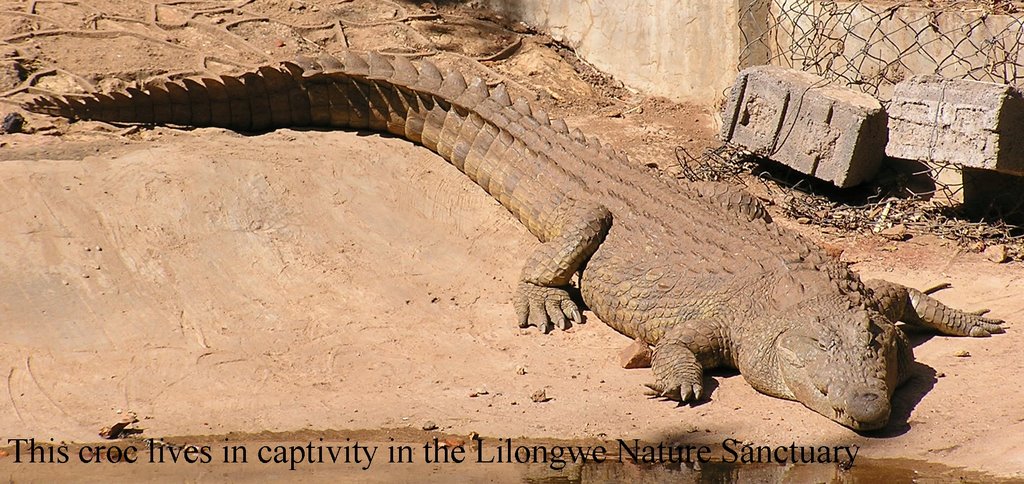
Two weekends ago we were at the lake with the stated purpose of hunting crocs. Two friends joined us at our favourite lodge in Senga Bay about an hour’s drive from Lilongwe. They were hoping to join the expedition to root out monsters. Unfortunately, we didn’t even make it out on to the lake. Windy conditions throughout the weekend made the water too rough for accurate target acquisition from a boat. Instead, we visited a hippo and bird sanctuary and watched rugby on satellite TV.

So far so good. On the earlier hunting trip to the same lodge but with another couple, we did make it out onto calm night waters with two guns in the boat. I have learned of two methods of hunting crocodiles. If night hunting is ruled out as impossible, unsuccessful, or otherwise illegal, crocs are enticed into the rage of a hunter’s gun with the dripping remains of a recently killed animal hung over the water as bait. The hunter(s) wait under natural or duly constructed cover for their prey to investigate and feed on the bloody offering with obvious results. In Malawi, the accepted, less labour intensive and most popular method of croc murder is night hunting with a spotlight.

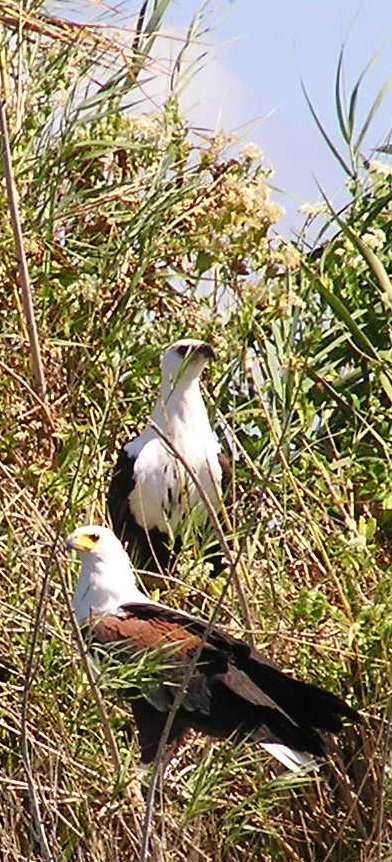
For the purposes of this expedition, the four of us headed out on the boat with a local guide during the day to scope out possible places where the beasts might be lurking. The guide took us into a strip of lakeshore where reeds and assorted water grasses formed a delta-like area of inlets and shallow waters. These form excellent fishing grounds for crocs and people alike. A short visit to a fishing camp revealed the information that indeed, there be monsters in those waters. One had killed a person only three months earlier. We spent some time motoring around the area, taking waypoints on a global positioning system unit and generally enjoying the beautiful environment. Apparently, the area used to be known for its phenomenal sport fishing. The sheer number of local fishermen on the water trolling for their living was ample evidence that this was probably no longer the case. The sight of the men standing in their dugouts swinging their circular nets over their heads like a lasso before flinging them into the water was picturesque if not encouraging. However, the profusion of water birds that prey on fish such as cormorants plus a beautiful pair of nesting fish eagles (pictured here) were a welcome sight. The clear water and warm sun enticed one hunter cum fisherman to try his hand with his fly fishing rod with no luck.

I returned with the hunters to the same spot well after dark. Having talked me into agreeing to be the “spotter” for their night’s hunting, they were able to dismiss the guide. I was reluctant to go due to the rough ride that we had had earlier and the other hunter’s wife’s refusal to accompany them. I did not have the excuse of pregnancy at my disposal and her encouragement that it was truly an adventure not to be missed won me over. It was a beautiful night. The water had calmed to a glassy surface that reflected the almost full moon beautifully. I learned to sweep the beam of light from the powerful spotlight across the surface of the water and to pick out the telltale red reflection from a crocodile’s eye hanging along the edge of the water where the grasses grew. Due to the need for activity by the hunter who was not the skipper of the boat, I was quickly demoted from spotlighter to gun bearer. In the end, I did not consider this a demotion given the challenges of trying to keep a loaded rifle out of the way of the hunters and the puddles in the boat while we quietly motored and drifted.

We spent the better part of two hours thus. We spotted, stalked and eventually came upon at least a dozen very young crocodiles that were all between 30-50cm in length. They were beautiful little things that were obviously too small to be considered fair game. It is amazing that their tiny eyes could be spotted and kept in our sights from at least a couple hundred meters. At one point, our companion hunter reached into the water and demonstrated beautiful croc capture technique, grabbing an unsuspecting creature just behind its head. We all marveled at its perfect little body and amazing strength as it thrashed in an effort to force its release. Of course it was released in due course and jack-knifed sharply as soon as the hunter let go in an attempt to snap at his hand in the air.

The larger size of the red dot combined with its distance from the comparative safety of the shore got the hunters really excited. The motor was cut and we drifted towards the beast. I tried to calm my panicked breathing as I quietly traded the gun for the light. The hunter steadied himself to shoot from the bow of the boat. I stood at his shoulder with the light, apprehensively wondering if the blast of the shotgun would knock me right into the water and if the thrashing of the beast would capsize us anyway. From my vantage, it was easily as long as the boat. We all saw and appreciated the size of the snout (and therefore the rest) of the monster before it dove and disappeared only to reappear as a distant red dot again before disappearing for good. We returned to the area several times, spotting the same beast and maybe a second smaller one from afar and coming within a few tens of meters each time but the bright moon was both a blessing and a curse as it lighted both our expedition and the beast’s escape.

As we quietly motored along the line of reeds where they met the water we were increasingly alarmed that most of this shoreline was covered by small gauge netting that hangs from the surface of the water to the shallow bottom about 1-3meters down. This is designed to catch everything that swims out of the reeds, including small crocodiles that keep to the edges of the reed beds for protection. This might explain the profusion of small crocs, the spotting of at least one and perhaps two monsters but nothing in between. This seeming unnaturally large generation gap can be explained by the admitted practice of the fishermen to kill small crocs that get caught in their nets thereby eliminating potential competitors before they become killers. It appears that the monsters have made their home there for some time but their attempts to reproduce are being frustrated by the fishing practices of the human communities in the area.

The fishermen complain of ever smaller catches in volume and size and quite obviously barely eke out an existence with their work. One might observe that state of the national highways and cost and availability of transport to move catches actually works in favour of the lake’s biodiversity but there’s no lack of piles of small fish in the cities’ markets. It appears that these methods are also much more effective in eliminating dangerous crocs from the lakeshore than the hunters’ expeditions will over the long term.


This is a shot of an average lakeshore fishing village in Senga Bay. Long tables are set up to dry fingerling fish that are a staple of many a Malawian’s diet. These houses sit on a small peninsula of land that is surrounded by water on three sides for most of the year. The dambo or swampy land in the foreground of this shot is occupied by cattle and hippos depending on how flooded it is. It is also prime crocodile habitat.

And so it appears that, along with most of the rest of the big game in Malawi, the crocodile is loosing ground (lakeshore habitat) to the pressures of a high population density living at subsistence levels. One wonders how long the government will find itself in the position to offer crocodile licenses. In the meantime, there is no lack of individuals who would be thrilled to be a part of the adventure weather they wield a gun or not. We’re in the process of sorting out how to offer people the chance to come along on an expedition whose time and space is fast coming to a close. I feel fortunate to have had the opportunity to feel the thrill of stalking one of the great beasts. It left me wondering who was at the greater advantage and I haven’t really been able to answer that question. I can say that I was much more pleased than the hunters to have left it to its business in safety, having proved its evolutionary superiority by outwitting three well equipped people in a boat with nothing more than the senses and strength it was born with.

Friday, April 07, 2006

Croc Hunting in Senga Bay Episode #2

I've been promising to post the croc hunting episodes for months now. Herewith Episode #2 -- AKA: The Last Malawi Dispatch. This was written and sent to the newsletter distribution list in February 2005 from Lilongwe, Malawi.

Given my imminent departure from Malawi, this past weekend was probably the last that I will enjoy in Senga Bay for quite some time. It is therefore unfortunate that the lodge we camped at was, for most intents and purposes closed, the owner away enjoying the comforts of another country and beach. Despite her absence, it was no trouble at all to secure her permission before she left to use her facilities due to our own cordial friendship with her and the fact that one of our companions for the weekend is a member of the family from whom she rents the premises of her lakeshore lodge.

It was a highly successful weekend of crocodile hunting and good companionship. That being said, there are two crocodiles of significant size and weight who are no longer in a position to either agree or disagree with that statement. Friday afternoon we were at the lodge and set up our tents and kitchen for a quick but hearty meal well before sundown. The three hunters were pleased to get out on the lake in good time to make it to their intended hunting grounds before dark. They would again use the nighttime spotlight technique described in my earlier dispatch on croc hunting. This time both the calm lake and lack of moon were in the hunters’ favour. However, due to my fairly advanced pregnancy, I elected to remain in camp. At just over five months along, I am not willing to forgo regular rest for the sake of going out and participating in the killing of (albeit man-eating) beasts.

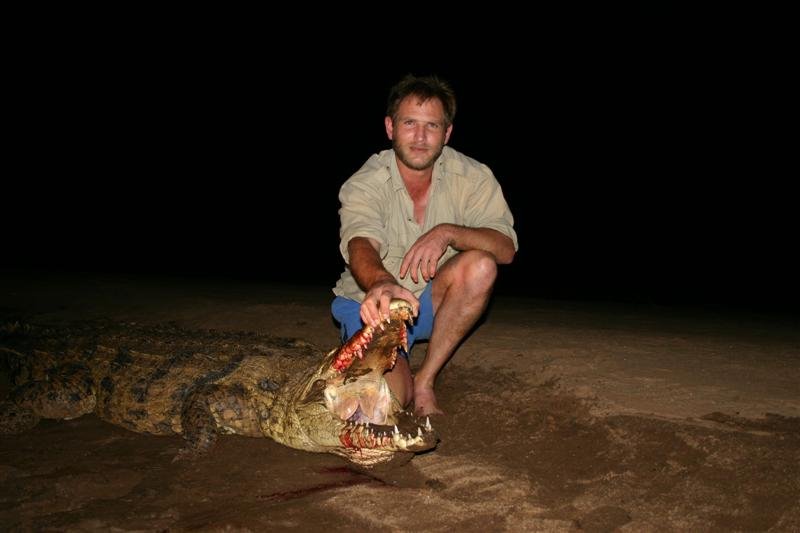
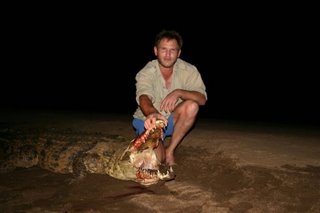
It was well past midnight when the shadow of my partner’s form looming over the tent woke me before he could proudly say: are you coming to see my croc? When I got to the beach, I found the hunters manhandling the carcass of a 10foot croc out of the semi-inflatable boat. This was followed by a quick session of post-kill photos with the hunters and the body. Everyone was very chuffed, even the camp watchmen summoned from their own rest, didn’t seem too unhappy to participate in the heavy work. In order to move the beast from the shore to a suitable place on the lodge grounds away from prying eyes, it was loaded into a wheelbarrow. This exercise required the efforts of about five men. The hunters then sat down to a midnight toast and snack.

As the hunters relived the excitement of their hunt, I learned that the crocodile was discovered lurking around some fishermen’s nets. In doing so it was directly competing with the fishermen by collecting whatever fish the nets caught. The locale was not far from a village and, given its size, it may not have preyed on adult people but certainly could have taken children and smaller livestock. The wound from the single bullet that killed the beast went straight through it’s head and probably killed it instantly. As the hunters worked together to retrieve the body from the reeds where it was caught the beast exhibited the post-death reflex movement for which crocodiles are known. The thrashing of the dead beast’s tail was enough to unbalance and throw off the grip of the big men as they struggled to bring the carcass aboard the boat.


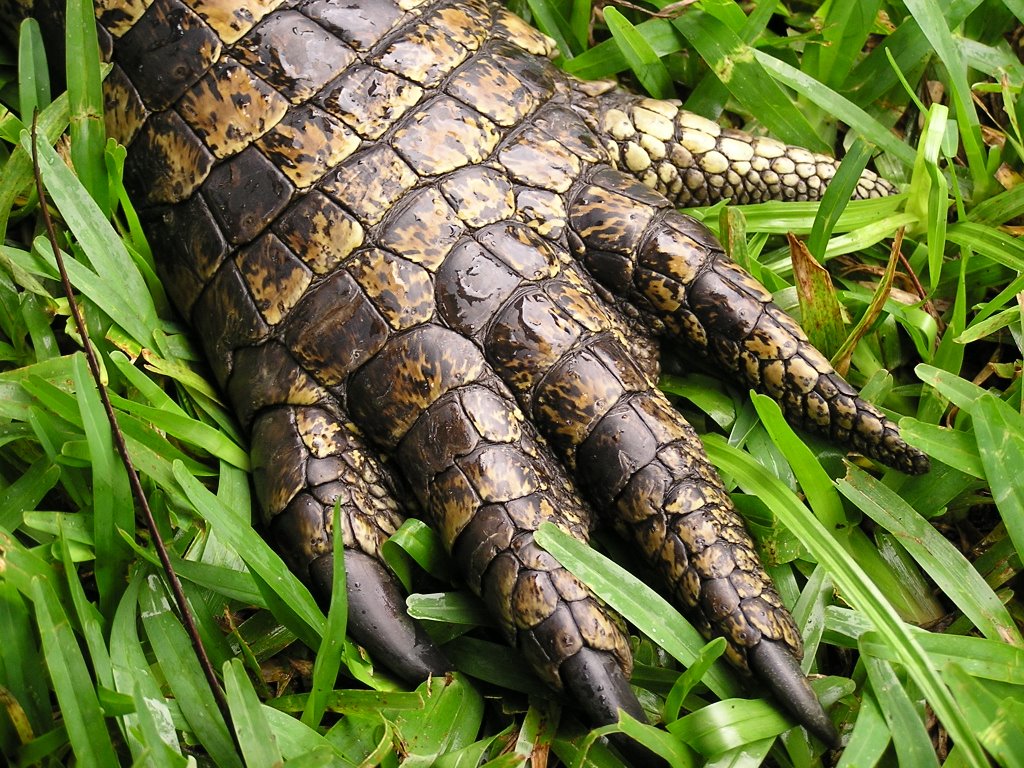
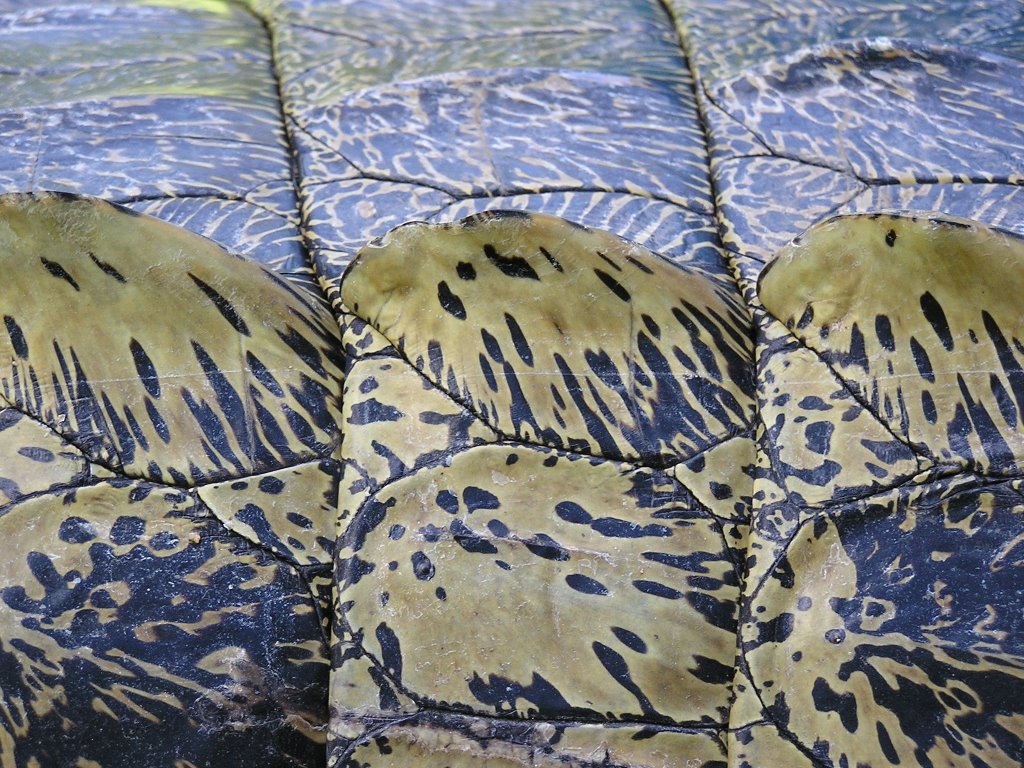
The next day, we all watched the fascinating process of skinning, marveling at the construction of the croc’s evil looking claws and the knife-edge sharpness of the ridges on its tail. This was indeed a monster. As explained in my earlier dispatch, it is the belly skin of the crocodile that is a commercially viable product. The rough, yet beautiful scales and ridges of the back are not as immediately useful in the construction of wallets, handbags and shoes. However, as one of the hunters and I took pictures of the topography of the crocodile, some interesting thoughts on display for aesthetic and educational purposes came to mind.


Given that the three men who were engaged to skin the beast had never skinned a croc before, it took them the better part of half a day to accomplish their task. They did so with skill and patience. The skin was in excellent condition both before and after the croc was finished wearing it. They expertly salted and rolled the belly skin for drying and did the same for the skin from the back. They also removed the head and de-fleshed the bones thereof in order for the jaw to become part of the souvenirs of the hunt. This was not the first crocodile that Kobus has shot and killed but the previous one had sunk away into the lake before he could retrieve the body.

Usually, African villagers will come from far to partake in the flesh of a game animal that has been hunted and killed. News of a kill (or anything else) travels fast. It is traditional for hunters to surrender the carcass to the locals once they have taken what they wish from it. However, in the case of crocodile in Malawi, the meat can unfortunately not be shared without danger to the hunters of being blamed for poisonings or worse. This is due to the traditional belief in “muti” or “mankwala.” Both of these are terms used for “medicine” rituals and potions and in this case the less than altruistic aspect of these traditional and still widely used practices. Crocodile spleen is considered very powerful and may very well be extremely poisonous. Not only would we be blamed for making this potent magic available but our party and our friend the lodge owner would quickly become targets for revenge should something awful occur. We could not let that happen. Therefore the skinners were carefully instructed not to open the internal cavities of the carcass at all and were not invited to take any of the flesh for their own consumption. The pinkish, naked body was left skinless and headless but otherwise perfectly intact and increasingly stinky on the lawn, ready to be disposed of in the lake, well away from the reach of any interested local sorcerers or traditional healers.

On Saturday evening, the men left again for a second night’s hunting as the sun was preparing to set. I sat reading a book, enjoying the chorus of local bird life before the inevitable blast of music from the local bar started up. With every word and beat clearly reaching me 500m away from the speakers, I could only imagine the eardrum shattering volume the men and women inside the bar compound were suffering. I found myself musing once again on the odd juxtapositions of the ancient with the modern in this place. I was surprised I slept at all but again, I woke shortly after midnight, this time to shouts and running. The howling of the wind and the roaring of the waves temporarily inured me to the realization that the music had stopped early for once. The lodge night watchmen were quickly gathering to join the three hunters in the effort to get the boat out of the water.

The wind was coming off the lake in a dry but steady blast, driving big, white-capped waves ashore and dashing our skipper’s boat dangerously against the beach with every pulse. His shouts above the roar of the weather quickly assured me that at least he was still well and in fine shape if a little frantic for the continued well being of his craft. The clear sky full of stars belied the sight of the angry water that would have made the trip back to camp rather uncomfortable if not downright dangerous. The waves and wind made it difficult to ascertain the condition of the other two hunters but eventually I could make out their forms as they strained to help drag the boat safely above the high water mark.

I completely missed seeing the shape of the dead crocodile on the beach between me and the crew around the boat until some time later. I did find the drenched gear that had been hastily piled on the beach and was busy carrying what I could back to the safety and shelter of the camp, starting with the camera and guns. With each trip, the strange smell first encountered on the beach became more overwhelming. By the time I was on my third or fourth tour the men had joined the effort and the snatches of conversation and stray comments caught over the roar of the lake and the wind provided an ever more detailed picture of their discomforts on the trip back to camp.

Having shot the beast up a river that feeds into the lake, they landed it on the shore to take some pictures. Kobus was again the man of the hour having done the deed himself. For the record: he shot his weapon three times over the entire weekend to dispatch the two beasts.


It was apparently a good half hour after all signs of the croc’s life and post-mortem reflex movement had ceased when they heaved the carcass into the boat. It was at that point that the former monster’s bowels decided to empty. At first only the boat’s skipper was really suffering as the mess was confined to the bow of the boat where water tends to collect and where he also stands to drive. A close encounter with a sandbar sent all the water and muck flying forward. This event combined with the small craft’s struggle through the four foot swells they encountered once they left the river and re-entered the lake quickly covered all three men and most of the gear in greasy, clingy stink. Leaving the carcass and the boat on the beach to wait for morning, they all hurried off to shower before toasting their good fortune at making it back to camp safely in such hair-raising and stinky circumstances.

Given my longer rest, I was the first to rise at 6am. I found the croc and the boat completely surrounded by curious people and a young man holding forth on crocodile misinformation and scare-tactics. The lodge watchman who had wisely sat himself in the boat was watching this beach-boy cum field guide and shaking his head. I approached with my camera and the leader of the mob bravely held the beast’s mouth open for a picture and then grabbed a wildly protesting small child and tried to put him on the ridged back to pose for another. The crowd gathered quickly and the braver men and children pushed and shoved each other for a chance to touch and feel the skin. One can safely assume that each and every one of them has lost someone close to them to witnessed or assumed crocodile attack. This was probably the first time that many of them could say that came that close to one without any harm to themselves.

While I was still standing among them, I discouraged a coordinated effort to flip the beast over to expose its less rugged belly skin. This was when I decided that the hunters needed to be woken to coordinate the shifting of beast’s resting place from the beach to the relative privacy of the lodge lawn. This move was effected as some real efforts at pulling legs away from the carcass and long sticks were in evidence among the crowd. I do not imagine that left to their own devices, the crowd would have been long in tearing the beast apart.
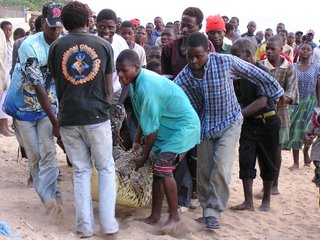


Of course, now it was general knowledge that we had a crocodile body in the lodge premises. The watchmen and skinners were constantly answering persistent knocks at the gate by people begging, pleading and demanding to view the spectacle. The beach boy cum croc mis-informant was particularly aggressive but, to his great disappointment, unsuccessful regarding his continuing involvement in the proceedings.

After a cooling rain shower and a thorough scrubbing of both boat and gear, the second carcass quickly joined the first in skinless and headless-ness. Later in the afternoon, both carcasses were unceremoniously dragged back to the water’s edge via Landrover. They again attracted lots of interest and attention despite their gag-inducing odors. As before, standing amongst the crowd, I heard that “mankwala” was a frequently muttered word. The people watched with interest, the more aggressive questioning and resisting the request to stand well away from the bodies as the hunters proceeded with the grisly task of launching the boat, dragging the crocs into the water and tying their tow ropes to the back of the boat while it bucked in the still strong waves. They motored away slowly towing the crocs behind them, out of sight, presumably to the far side of a close island. There they could find some rocks to tie to the carcasses to sink them back into the lake that spawned them. Their rotten and offal smells lingered in the grass where they were skinned and over the path where they were dragged back to the lake. The lodge owner’s dogs will have an interesting time sorting out what happened in their yard while they were away. Hopefully, in the interests of our continued welcome at the lodge, enough rain between now and their return will obscure any and all offending odors that could be detected via human olfactory capabilities.

Local interest in the crocs also lingered. It was some time after the men had motored away when I sent a man to answer yet more knocking at the gate. He returned with the story that it was “someone wanting to see the dinosaur.” Brilliant. One of the skinners later reported that a local medicine man had indeed offered him a significant amount of cash for “parts from inside” the body. Thankfully, our loyal skinner was not persuaded by the bribe. I explained that the method behind our apparent madness at sinking so much meat back into the lake was to avoid just that. It must be said that even the skinners were divided on whether or not the crocs would have made good eating. Every Malawian I have spoken to about crocs is convinced that one crocodile spleen in the wrong hands could be used to poison entire villages. When it comes to mankwala, even the most educated respects and even fears the power of the traditional healer. The skinners were well rewarded for their weekend’s work and all of them will get prints of the pictures I took of them at their work – they told me that their families will not believe the unlikely story that they were put to skinning crocs without photographic evidence.

So there you have it. A final Malawi dispatch. While my recent neglect of this newsletter project does not connote a complete lack of adventure or interesting events in my life, I am glad to leave you with such an unusual tale.

Tuesday, January 31, 2006

Krista vs. the Spider

In honour of yesterday’s post, I’ve decided to post the following excerpt from one of my earlier Malawi newsletters (June 2002). It is the story of the demise of a rather large spider. I’ll put in a couple shots of some local creepy crawlies that I’ve seen along the way. I am pleased to report that overnight we enjoyed some substantial rain showers. Given the old belief that to kill a spider brings rain, I’m posting the death of the spider story in the hopes of encouraging it to rain some more.

There I was minding my own business, digging through one of my storage boxes for a bar of soap or some such thing when my eye caught something out of the ordinary. It was the second largest spider that I have ever seen without the benefit of a barrier of some kind to protect us from each other. I was thankful that I saw it before I put my hand on it – yikes! It was doing its utmost to make itself very small in order not to be seen amongst some first aid supplies. Given its bulk, it wasn’t doing a very good job and even all curled up on itself, it was the size of a small mouse. Yes, it was furry too.

“I’m sorry,” I addressed the spider, “but this will not do. You’re going to have to go.” I give this explanation to all the creatures that I will not tolerate in my living space. This includes any spider bigger than the local daddy long legs and all the winged creatures with a sting – mosquitoes, bees, wasps… I do tolerate the crickets, frogs, gekos, (most) ants and all the weird little things that throw themselves at my kerosene lamps throughout the evening when they’re lit. Anyway, I fetched the can of evil smelling DOOM (that is the high-powered local version of RAID to all you North Americans) and gassed the poor creature with several blasts. DOOM gives me a headache and causes almost instant death to smaller insects but anything larger than a housefly is usually only initially stunned by the gas and then tends to thrash around for a while before giving up and keeling over as the poison affects their nervous system. Often enough, I will “finish off” an intruder with a swat from a handy shoe or newspaper after the stunning blast in order to conserve the gas, my health and to put the creature out of its misery.

As I said, this spider was rather large and the blast of DOOM caused it to briefly curl up even tighter as if it was trying to avoid the spray but then I watched as it suddenly stretched to its fullest (very alarming) diameter and back to the original crouch and then started thrashing around the stuff in my box. I was a little worried that I hadn’t thought through how I was going to get the spider out of the box and what I was going to do if it decided to try to hide itself away…I had subjected other smaller spiders to DOOM-ing that had lived for a day or more afterwards. I couldn’t monitor the box all day but what if it decided to go and die elsewhere in the house? I was not going to be able to be comfortable with this thing roaming freely and liable to turn up anywhere. The beast very graciously climbed into an open box of sticky bandages (plasters for all you Brit-trained English speakers) and solved my problem with how to wrangle it out of my house. As it thrashed inside the box it made the most alarming amount of noise for a spider in a box but I plucked up my courage enough to close the lid of the box and carry it outside to dump out the spider and the rest of the contents into my garden. The fall stunned the creature again and as it was lying on its back recovering, I collected the bandages that had fallen around it. I watched as it righted itself, staggered a little and then resolutely made its way back towards my house. That was when I decided that the game was up and smacked it with a slipper. One leg was left behind when I swept the remains back into the garden so I did a post mortem collection of data. The four distinct sections of the leg added up to a whopping length of 3.4cm and at its widest it was 3mm across with a clearly defined muscle where it was attached to the body of the beast. As earlier stated, any interested bug researchers are more than welcome!

Monday, January 30, 2006

Tanzanian Tales IV: Water is Life

There is a steady rain falling outside. It is early morning and therefore an unusual time for the rain to fall. Generally, we get rain in the evening and at night here. The downpour interrupts both our television satellite service and our microwave connections to email and internet. I walk through the house making note of places where the ceiling leaks and carefully watch where I put my feet. Both dangerous and benign (but still large) creatures tend to seek higher ground as their own homes are flooded outside. But I am by no means complaining. In fact, the sound of rain drumming on the roof and even dripping through onto the ceiling and floors inside gives my heart peace and raises my spirit with hope. I say let the rain fall and keep falling.

We are stationed in the heart of a region that has experienced severe drought this year. Here at Mwadui, the rain that has fallen since the wet season that was due to start in November is not even the amount that they usually expect to fall over a week. This is not a disaster that strikes quickly but it is as cataclysmic as a flood. We are witnessing the daily deterioration of the people and their economy knowing all the while that the mine’s continued operations and therefore our posting also rely on significant amounts of water being available to the process of separating diamonds from tonnes of dirt.

It began late in the dry season. More and more cattle, sheep and goat herders were allowing their charges to stray into the mine area to graze on the (more) abundant fodder available here. The mine is probably one of the only diamond mines in the world whose area is not protected by a perimeter fence. However, the demarcation of mine property vs. outside is clearly distinguished by the presence of trees on the inside and almost none but small scrub, the odd mango tree and the mighty baobab (unsuitable for fuel wood) on the outside. If anyone needs convincing of the importance of trees to the ecosystem and especially their cooling and moisture retaining qualities, I would strongly encourage them to visit places in Africa where trees are protected and compare these to their neighbouring areas that have been stripped of trees.


As time has progressed, the demarcation between mine area and the outside has become hotter, dustier and more barren looking by the day. Fields that were prepared for planting when the first rains began sit idle, their earth mounds turning to dust. A steady stream of enterprising cyclists can been seen riding between Mwadui’s Songwa Dam and Maganzu township about 10km from the mine. These men have strapped as many as four 20litre containers to their bikes which they fill with dam water to sell to the residents of the township. All the closer sources of water have dried up. The aforementioned herders have come from ever farther away to bring their animals to food and water. At least five cows have died on the mine property, too exhausted from their dry walk to take advantage of the nourishment available. Sadly, their erstwhile companions in the herd are used to drag the carcasses out of the mine area.


Another sign of slowly advancing disaster is the water level in the mine’s dams. This is a particularly dry part of Tanzania. We have been in the habit of visiting three of the dams that were constructed in the mine area to supply the town of Mwadui in addition to the water requirements for the mining process. During Williamson’s time, Songwa Dam (dam in this instance means man-made lake or reservoir) was turned into a recreation area with the addition of a sailing club complete with club house, boats, imported water fowl and fish. In each location, one can walk out into the basin of the dam quite some distance. Dam walls that should be barely containing the deluge of water are exposed and dry. The dam overflows and natural wash aways or seasonal rivers that would normally be running with water at this time are dry with well trodden footpaths running through them towards the puddles that remain inside the dams themselves. The flocks of migratory birds that come to enjoy the usual seasonal abundance of water are here. We’ve seen flocks of spoonbills, open billed storks, ducks and geese of several varieties and, ironically, so-called “rain birds” a type of stork that comes with the rainy season. Unfortunately, their picturesque presence standing in the centre of the Alamasi Dam is a sign of the times – the water barely comes up to their knees. Their numbers put the water purification systems to the test as they can be seen to contaminate the little supplies we have left.

In the wider picture, the newspapers and television news are full of ominous stories. Power cuts will soon be more prolonged and frequent due to the reduced capacity of the hydro turbines that power the national grid. Without power and water the rest of the struggling industry in this poor country will be under more strain. Animals in the national parks are dying due to lack of water, putting tourist dollars at risk. Even the route of the great migration of wildebeest and zebra has been affected. The herds are off course, gathering and staying at water points that are not usually on their itinerary and competing with human communities for water supplies. Animals are going longer between these oases and the less hardy are suffering and dying. To some this is a tragedy, to others it is a part of a natural cycle. If blame is to be apportioned, deforestation often appears at the top of the list, followed by global warming and the continued effects of the ElNino/ElNina weather pattern.

It is not only Tanzania that is suffering this drought. It appears to be a regional phenomenon, affecting the micro and macro economics of countries and the entire region. It is two weeks since I began writing this missive. We have had no rain since the glorious shower that inspired me to begin writing in the first place. Almost daily, the wind rises, clouds gather and thunder rumbles promisingly but nothing falls. The people here, like their fellow subsistence farmers in Malawi and in Uganda seem to prefer not to discuss the rain, or when it might come. They are stoic, literally going the extra distance to water livestock and fulfill their meager household needs until it falls and then they rejoice in the relief it brings.

Sunday, January 01, 2006

Tanzanian Tales III: Happy Holidays

Those who have been reading my African dispatches for the past few years are probably getting tired of me starting off my Christmas letter by complaining that it is challenge to generate Christmas spirit in the absence of winter as we experience it in the Northern hemisphere. Not being a skier and disliking ice skating (*gasp* no, say it ain’t so!) as I do, Christmas time is really the only time that I actually find myself missing snow and ice as the seasonal markers of the magical time of year that is Christmas for me. I miss the clean, cozy quiet of the world after a big snowfall and the clear, cold blue of the sky when the sun comes out and makes the snow sparkle. I even miss the blast of cold that forces its way into the interior of the house as people arrive stamping the snow off heavy boots and finding places to hang coats, hats, scarves and gloves. Somehow all these things represent and inspire in me the warmth and good cheer of Christmas.

This is now the fourth Christmas that I have celebrated in Africa and the third African country where I have been living when the blessed day came and went. Each year as I have struggled to find my Christmas spirit in the absence of familiar surroundings and loved ones, I have also found ways to bring some of my comfortable traditions to each place and share new experiences with the family that we have made and the wonderful friends that we have found.

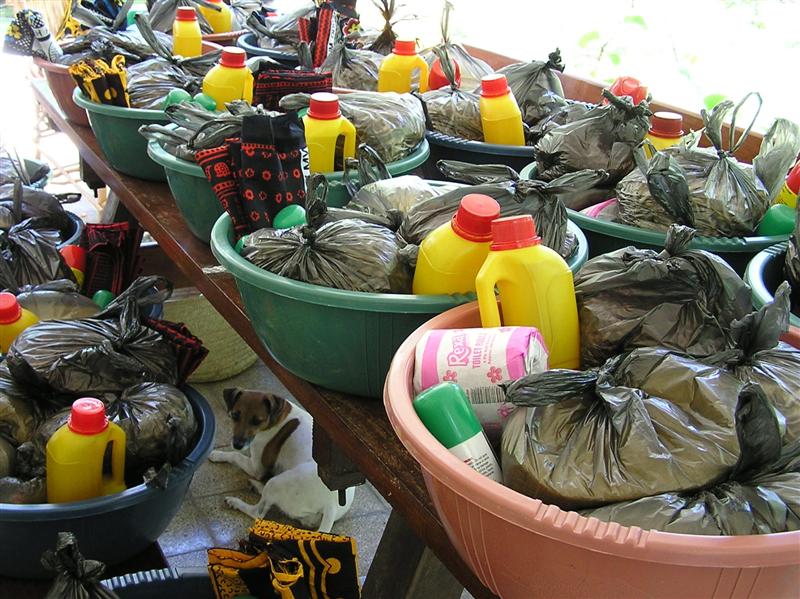
This year, we started the celebrations a week early with a Christmas hamper gift ceremony at one of the Mwadui churches. One of the muzungu (white, foreign) ladies of the mine attends a church close by her house throughout the year with her husband. It is a typically lively African congregation that uses a bare-bones hall as their church building, filling the space with song and praise several days a week in order to support its members in a Christian way of life. In an effort to give back to a spiritual community that had been so welcoming, Margaret decided that she wanted to do a Christmas hamper project. Early in November, the Church elders were tasked to make a list of needy families. They outdid themselves by inviting elderly and infirm Mwadui residents that are not necessarily regular members of their church to the Saturday morning ceremony to distribute the hampers. Meanwhile, some of the other ladies of the mine got involved and made a collection of money, excess items like bug spray, toilet paper and soap as well as used clothes. The cash was spent on washing basins which served as the containers for the beans, rice, bread flour, maize flour, tea, sugar, washing powder, sweets, kapenta (dried fish), cooking oil and salt which were also on the list. Margaret reported that the shopping was a memorable experience as the money collected for such a good cause seemed to be multiplying in her pocket like the proverbial loaves and fishes. Not only did they buy plenty of each of the items on the list but the cash stretched to afford kanga fabrics for each recipient as well as more sweets and still there was some small change left over. Of course this went in the collection basket at the Church. We all got together on the Wednesday before the ceremony to divide the items into the basins which were then wrapped in the gaily coloured fabrics. Surprisingly, this is the first time in living memory that such a thing has been done in Mwadui. Plans are underway to make sure that it is not the last.


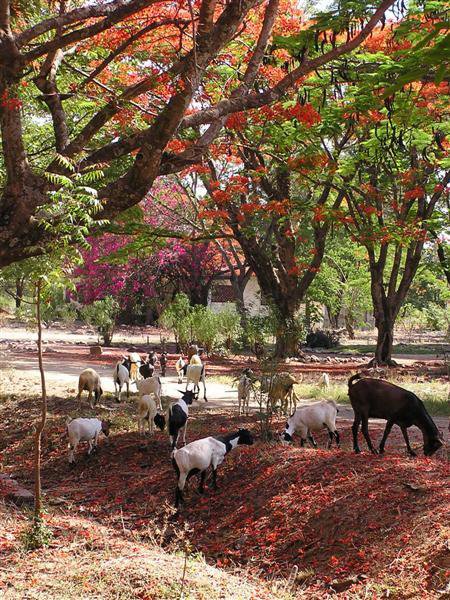
After such a feel-good start to my Christmas week, I couldn’t help but get in the mood. As Simon and I did our morning walks I found myself looking at Mwadui with new eyes. The last of the blossoms on the flame trees and the ever blooming bougainvillea were suddenly happy reminders of the twinkling lights of the season in Canada. I busied myself with baking and crafting and managed to take on hosting the weekly mine ladies’ tea in my house for the first time since we arrived on the mine. Presents arrived for Simon from all over and our snail-mail and e-mail inboxes filled with greetings as friends from near and far took the time to say hello. I spent the day on Christmas Eve baking Christmas goodies and preparing for a quiet evening braai/BBQ with another couple at our house. It felt good to fill my home with some of the fragrances that I associate with Christmas. While we didn’t get a tree to decorate, Kobus allowed the new decorations we were given to be hung from a dried seed arrangement that he put together a couple months ago.


At six months, Simon is still a little too young to grasp that it was a different day from any other but he did enjoy tearing at the paper on his gifts on Christmas morning. He also enjoyed the attention from both of us as for once we presented him with paper that we encouraged him to rip up.


Most of the muzungu on the mine left for the holidays but given that the mine production never ceases, some of the senior management of each of the mining companies has to remain behind. Most of these gathered for a Christmas feast. We had pork roasted on a spit along with dishes from each family’s Christmas traditions by the pool in the afternoon. By then, I was back to loving the climate and no longer missing the snow. Simon outdid himself, getting in the pool quite happily and even trying to swim after some of the toys that were floating in the water.

As I get back to finishing this off, it is New Years Day. We had the party here last night so that Simon could sleep in his bed as we celebrated the passing of 2005. We were all outside in the garden enjoying snacks cooked over a fire as the moment arrived. We were comparing the time on watches and cellphones trying to decide if midnight had been and gone already or not. Then the mine’s midnight siren which signals the end of the night shift’s lunch break let us know that Mwadui had officially worked its way into 2006.

So here we are. I hope that everyone has had a happy holiday season and wishing all a very healthy and prosperous 2006. You can expect regular reports on life in Tanzania as the year progresses and I’m hoping to post some of my Malawi newsletters very shortly.

All the best,
Krista

Saturday, November 19, 2005

Tanzanian Tales II: The Meat Market


Market day at Munzi is Thursdays. It appears that it has been a major market since before the advent of industrial infrastructure. The crossroads it inhabits are much more conducive to bike and oxcart traffic which probably make up 95% of the vehicles that go there. Despite the beaten track being just that: a track, the market is one of the biggest I have seen outside of a major city. The town of Munzi lies some 30km from the tarmac/paved road and consists of no more than a row of typical African one roomed shops and service providers lining a couple hundred meters on both sides of a rutted path. There are power wires that we followed into town but we saw no evidence of electricity being in use once we were in the market. Our “cool” drinks came out of cool boxes and unfortunately I failed to get a picture of the bicycle driven butchers’ blades and knife sharpeners.

The market hosts an amazing number and variety of vendors. It is laid out over several hectares of stalls of varying degrees of permanence and solidity. Despite the labyrinth- like layout, the vendors organize themselves into sections by type of wares. The plastic container sellers group themselves into one area. New plastic containers in primary colours are kept to one end while recycled container vendors group towards another end of their particular stretch of land. Each vendor offers roughly the same items but all do brisk business. Throughout the market young men wander around with heavy stacks of plastic bags slung over their shoulders. These can be bought for a few cents at the point of sale of items that require a carrier.

In the clothing and textiles section lengths of cord strung between posts and trees serve to delineate a stall-holder’s space and double as racks for their wares. Piles of used clothing with tags and logos that tell me that they are North American cast offs sit in the centre of these tented booths. Rooting through these ubiquitous piles in African markets has become somewhat of a sport as it has yielded cheap, barely used, name brand treasures on several occasions. In this market, I was impressed at the displays that were made of the kanga fabrics. Women in this part of the world don’t go out in public without wrapping themselves in colourful printed cotton fabrics which have different names in each country I have visited. These fabrics are also used to make a myriad of other things including slings for babies and the increasingly popular Mandela shirts. Here the stiffness of the newly printed materials is used to advantage to create plies of small pyramids of fabric arranged around a treadle sewing machine. Seated at each sewing machine was a tailor or seamstress who will take your order and probably have it ready by the end of the day.

In the fruit and vegetables section, a simple tarp demarks real estate, provides a backdrop to artfully piled tomatoes, onions, pineapples or mangoes and also probably protected the produce as it was transported there. The sellers of traditional medicines build themselves lean-to type stalls with raised platforms to display their wares. They also string up their tarps for shade purposes. Their ancient knowledge is sold along side such things as antique coins, rusted iron gadgets of assorted sizes and unknown use and colourful beads in both glass and plastic. The prepared food vendors have built themselves mud brick huts with iron sheets for roofs. They cook their offerings outside for all to see and smell as they are going by. The shade inside their huts offers relative coolness and perhaps a bench for their customers to sit comfortably while they eat.

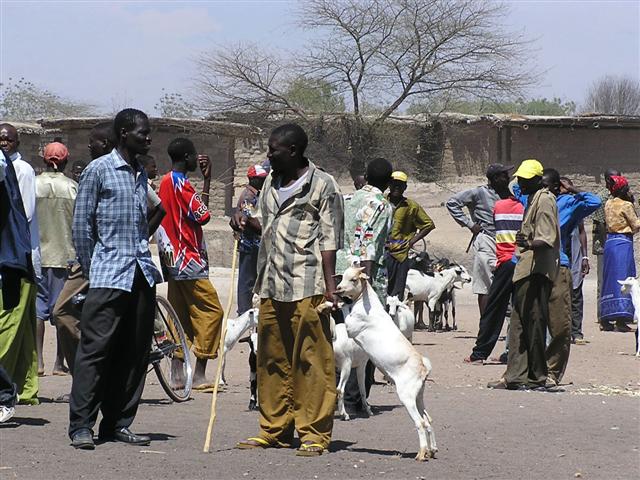
The biggest sections by far in the Munzi market were the areas devoted to the sale of animals and meat. The livestock area was teeming with animals and their handlers. Cattle, sheep and goats were the main offerings. A handler might be responsible for as few as one or two or as many as a dozen or more animals. Impressions in the earth that serve as pens might have been dug manually or were simply worn in by dozens of generations of herds being brought to this place to sell. This is not a place for the faint of heart or a vegetarian. Animals were being rather roughly handled and expertly but painfully penned and otherwise restrained. The cattle in particular sported rather evil yet artful scarification that serves for identification and decoration.

We were after fresh meat -- lamb to be specific. We were given to understand that excellent quality and prices would be worth the drive. Our information on getting there was sketchy: take a left off the road just past a magnificent baobab half way between Mwadui and Shinyanga and keep left. We’d find the market just over a “major” bridge. One flat tyre (or puncture as these events are known around here), one debate over the size of an intervening bridge and an hour to cover the 30km of washboard ridged track and we were there.

We spent about an hour looking around and seeking out an interpreter to help with the negotiation for meat. Our interpreter led us to the butchering section of the market. While the sight that met us was not entirely pleasant to the eyes or nose, it is probably the best place to get fresh meat in this area or in any place where refrigeration (and especially refrigerated transport) is hard to come by. This market’s methods are probably as old as the practice of selling meat at market. Entire freshly butchered carcasses hung from racks made of makeshift poles. Hooves and tails were left on pieces in order to ease identification of the type of meat. The heads and offal meat of the creatures was offered separately on small platforms. To our pleasant surprise, each butchered beast’s lungs, kidneys and liver were inspected by a roving government meat inspector.

With the aid of the interpreter, Kobus negotiated for two sheep to be slaughtered; one to roast whole on a spit and the second to be cut into manageable pieces for the braai (BBQ) or oven. The entire order would cost less than C$30. We adjourned to a bar with a view of the butcheries to have the aforementioned warmish drink and await the preparation of our beasts. It felt like a very civilized and relaxing way of going about one’s shopping.

Unfortunately, the morning ended on a sour note as I fell victim to another of the age old characters of any market – the pickpocket. Kobus had gone to move the truck to an advantageous spot and I wandered after the couple we were with as they followed our interpreter back into the textiles section on a hunt for some Masai blankets. Suddenly I was stopped and quite effectively isolated from my friends by a couple seemingly friendly young men who were interested in looking at my baby. I should have clued in that they were not the usual curious women. As I was distracted by my mothers’ instinct to watch hands reaching for Simon, I felt the hand reach into my pocket and then the culprits were gone with my money, shielded by the fabrics and clothes draped over lines all around us. A crowd gathered a gaped as the muzungu (white foreigner) with the baby stood there and yelled but to no avail. My money was gone, my ego bruised but Simon and I were otherwise fine, which is of course the important thing. In hindsight, I have to admire Simon’s composure as his mother stood amongst a crowd of strangers and completely lost her composure. A few moments of miserable searching and I was back in the supportive and protective company of my husband and friends. The discussion of the event served to divert our attention from the discomforts of the return trip on the rutted path back to the paved road and we were quickly home in Mwadui.

Despite it being a couple weeks since our visit to Munzi market, I have not yet tasted the fruits of our visit so I can not report on the taste of our purchases. The lamb rests in our chest freezer, the bulky packages calling out for an occasion to be sampled. I am quite looking forward to it. Meanwhile, life trips along and we’re all doing fine. Thanks to all for your encouragement and good thoughts. I am most grateful.

Friday, November 04, 2005

Tanzanian Tales I: First Impressions

Below is the first of my newsletters from Tanzania. It joins a collection of newsletters that began in Uganda and continued on to Malawi in an on-going project who's aim is to share my experience of Africa with interested folk around the world. This latest was posted to approximately 150 interested e-mail subscribers on 18 October 2005. Stay tuned for the next post very soon.

Williamson Diamond Mine, Mwadui, Tanzania

Despite several such arrivals in a new country over the past few years, this arrival did not fail to arouse a familiar mixture of anxieties and anticipations. The pleasures and challenges of adjusting to living in a new place are both unique to a location and era of one’s life while also being inevitable consequences of a big move. In this case, anxiety in particular was suddenly compounded as our small internal Tanzanian commuter airplane touched down on Shinyanga’s gravel runway. It was as smooth as possible a landing by an obviously experienced pilot but the less than solid feel of the gravel under the airplane’s landing gear was a new and unsettling experience for me. I’m told it is even more fun when the runway is awash with recent rain. It was however, a real pleasure to get a bird’s eye view of our new home right away as we circled for the landing.

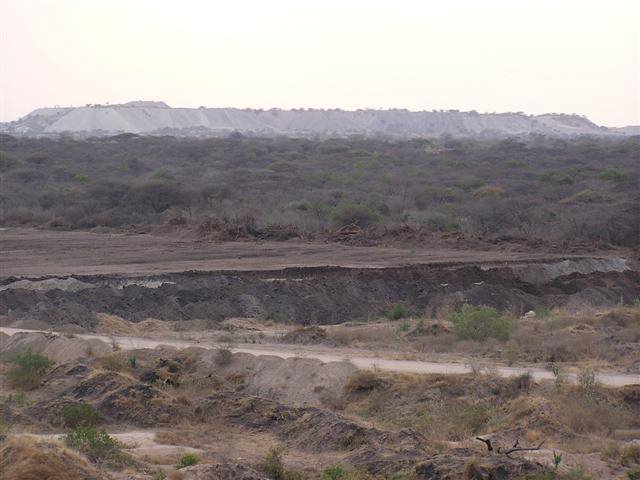
We’ve landed on a rather flat plain where the only topographical feature of note is the chain of mountains that have been raised around the mine. These can be seen from several kilometers away when the dust haze is not too thick. The dune-like hills are the mounds of dirt that have been dug up, sifted and otherwise processed and then piled over the six decades that this mine has been in operation. The older ones are covered in the natural grasses and even some shrubs and trees that are natural to the region.

This area of Tanzania (Shinyanga Province) awaits the rains that will signal the start of the growing season. The landscape is therefore rather barren looking at the moment. The colour palette is predominately drawn from shades of brown. Freshly turned earth of prepared fields tend towards the red end of that spectrum while the dry pans and river beds crack open to reveal greys and blacks.

It may be a rather desolate, dusty time of year but where there is water, life teems. Thanks to regular watering of the plants, our garden is yielding bananas and papaya with which we feed Simon in addition to ourselves. We also have a mango tree which is heavily laden with green fruit. The little green mangoes, which were barely the size of my thumbnail when we arrived a month ago, are now half the size of the palm of my hand and increasing in size almost perceptively day by day. We not only share this produce with the two people who work in the house and the garden but also with the amazing variety of birds and other creatures that populate the yard. Our house is old but open and airy in the typical colonial style of the era and area. It is comfortable but somewhat in need of repair due to some neglect as well as the almost daily earth quake it endures as a result of the blast from on-going mine operations.

So here we are in Mwadui. This is the town that J.T.Williamson built to house the people that work on the diamond mine he established here almost 60 years ago. It is a town full of colonial style buildings and even more history. Each building has a story. There is still a technical mining college in addition to at least 8 other (mostly primary) schools. There are apparently at least as many churches as well. There are tennis and squash courts and a standing up/falling down yacht club beside a man made dam. Williamson stocked the dam with fish and birds he imported for his employees’ pleasure. Many generations later, the fish are feeding the local population of people as well as the descendants of the pelicans and other water birds he brought in. Two little courtyards of small stores that once might have supplied many luxuries now sell basic commodities. The swimming pool by the Managing Director’s house sports a fountain in the shallow end as well as a change rooms with a bar. Williamson’s beautiful stone walled house is connected by an underground tunnel to the (now abandoned) original diamond sort house. The present occupants of the house very kindly showed me around and even pointed out a couple of the wall safes where the notoriously secretive and shrewd Williamson stashed fortunes in diamonds.

The mine “plant” from which issues the mountains of tailings, lakes of “slime” and small packages of diamond concentrate runs 24 hours a day 7 days a week and 362 days a year. It lays down a background noise whose clatter sounds like a freight train passing in the distance. There are two types of mining now going on here. In the original open pit work continues on the main diamond pipe that Williamson discovered. Meanwhile a certain radius of the immediate area is mined for alluvial diamonds that have been washed away from the main pipe over the past million or so years. In alluvial mining, the surface layer of topsoil is methodically removed to expose the second layer of earth which is also removed and processed in much the same way as what is mined from the main pit.

Mwadui is relatively busy compared to other isolated places I have lived in Africa. There is a resident herd of milk cattle that provide us with a daily litre of fresh milk delivered to our door early every morning. We can also buy other basics such as tomatoes and onions and laundry soap in the aforementioned markets. If we get there early enough, the Mwadui bakery might still have a loaf of bread to sell. However, there is no restaurant or grocery store per se. For almost everything aside from beer and “cooldrink” (sodas/pop), we travel to Shinyanga or Mwanza or even further to Dar es Salam.

Shinyanga is our closest town. It boasts a tiny grocery store that caters specifically to the muzungu (white ex-patriots/foreigners) who work on the mine. There we can buy things like fruit juice, chocolate and cheese. Between this provincial capital and the mine is a notorious township called Maganzu. There one can observe the work of local native miners who have bought claims to mine alluvial diamonds that might have washed this far – some 10km or more from the main pipe. The claims appear to be a couple meters square and I imagine that finding even a single gemstone in these tiny plots must be akin to winning the lottery. The principal is the same for alluvial mining within the mine area but here all the work is done by hand. Each tiny pit is ringed by the topsoil that has been removed to expose the second layer. However, these are the legitimate fronts for the illegitimate business that keeps Kobus busy as a mine security manager – illegal diggers on the mine, the so-called “wabeshi.”

The mine area is not fenced but after several generations it can be said that it is generally known who belongs where and who has the right to dig in a place or not. Desperate people come by day and night to try their luck at finding diamonds in both the pit and alluvial mining areas. The layer of earth in question is exposed in these areas, making it rather more likely that there are stones to be found more easily. However, it is dangerous work. The wabeshi most often work under cover of darkness with very little light. They are liable to get caught in cave ins among other hazards, not least of which are disturbing resident spitting cobras or other less than friendly wildlife. They seem to work in groups of a handful to a couple dozen. When they are spotted and chased by roaming guards, they often try to hide in swampy areas where they know the guards won’t follow. Unfortunately, a few have drowned over the past few months. The illegal diggers are not just individuals with a taste for riches that overwhelms their sense of self preservation. They are organized and sent in by diamond dealers who are well known but difficult to catch in the act. Who’s to say that a specific stone came from a legitimate claim or has been filched from someone else’s?

I’m not one to place much store in first impressions. I try to keep an open mind and to find the good in everything for as long as possible. So far this hasn’t been too much of a challenge here. There’s obviously a lot to learn and do around Mwadui if one has but a bit of interest and time. I feel fortunate to have both.

Of course the demands of motherhood are keeping me rather happily busy but it appears that I’ll have lots to write and think about as I get the chance. As always, questions and comments are most welcome and I do try to respond to all personal responses that these newsletters inspire. Thanks to all for your good thoughts and wishes.