Tuesday, January 31, 2006

Krista vs. the Spider

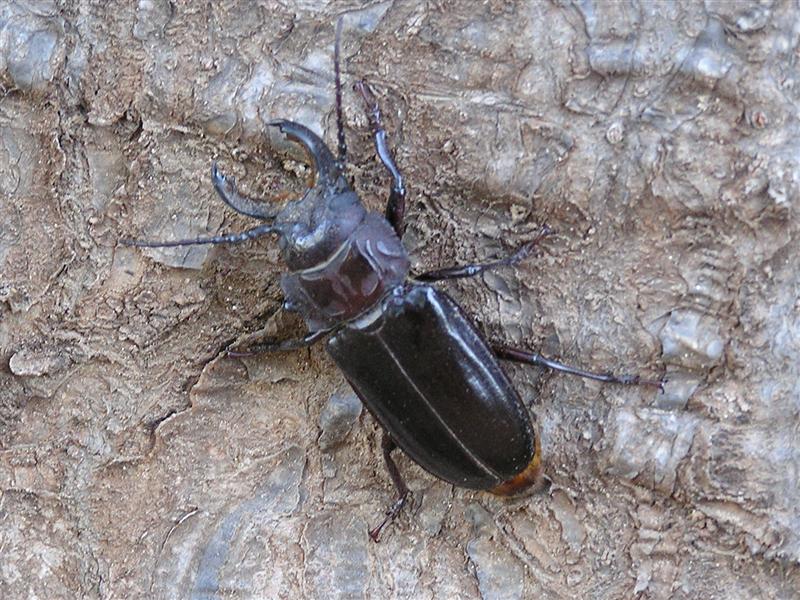
In honour of yesterday’s post, I’ve decided to post the following excerpt from one of my earlier Malawi newsletters (June 2002). It is the story of the demise of a rather large spider. I’ll put in a couple shots of some local creepy crawlies that I’ve seen along the way. I am pleased to report that overnight we enjoyed some substantial rain showers. Given the old belief that to kill a spider brings rain, I’m posting the death of the spider story in the hopes of encouraging it to rain some more.

There I was minding my own business, digging through one of my storage boxes for a bar of soap or some such thing when my eye caught something out of the ordinary. It was the second largest spider that I have ever seen without the benefit of a barrier of some kind to protect us from each other. I was thankful that I saw it before I put my hand on it – yikes! It was doing its utmost to make itself very small in order not to be seen amongst some first aid supplies. Given its bulk, it wasn’t doing a very good job and even all curled up on itself, it was the size of a small mouse. Yes, it was furry too.

“I’m sorry,” I addressed the spider, “but this will not do. You’re going to have to go.” I give this explanation to all the creatures that I will not tolerate in my living space. This includes any spider bigger than the local daddy long legs and all the winged creatures with a sting – mosquitoes, bees, wasps… I do tolerate the crickets, frogs, gekos, (most) ants and all the weird little things that throw themselves at my kerosene lamps throughout the evening when they’re lit. Anyway, I fetched the can of evil smelling DOOM (that is the high-powered local version of RAID to all you North Americans) and gassed the poor creature with several blasts. DOOM gives me a headache and causes almost instant death to smaller insects but anything larger than a housefly is usually only initially stunned by the gas and then tends to thrash around for a while before giving up and keeling over as the poison affects their nervous system. Often enough, I will “finish off” an intruder with a swat from a handy shoe or newspaper after the stunning blast in order to conserve the gas, my health and to put the creature out of its misery.

As I said, this spider was rather large and the blast of DOOM caused it to briefly curl up even tighter as if it was trying to avoid the spray but then I watched as it suddenly stretched to its fullest (very alarming) diameter and back to the original crouch and then started thrashing around the stuff in my box. I was a little worried that I hadn’t thought through how I was going to get the spider out of the box and what I was going to do if it decided to try to hide itself away…I had subjected other smaller spiders to DOOM-ing that had lived for a day or more afterwards. I couldn’t monitor the box all day but what if it decided to go and die elsewhere in the house? I was not going to be able to be comfortable with this thing roaming freely and liable to turn up anywhere. The beast very graciously climbed into an open box of sticky bandages (plasters for all you Brit-trained English speakers) and solved my problem with how to wrangle it out of my house. As it thrashed inside the box it made the most alarming amount of noise for a spider in a box but I plucked up my courage enough to close the lid of the box and carry it outside to dump out the spider and the rest of the contents into my garden. The fall stunned the creature again and as it was lying on its back recovering, I collected the bandages that had fallen around it. I watched as it righted itself, staggered a little and then resolutely made its way back towards my house. That was when I decided that the game was up and smacked it with a slipper. One leg was left behind when I swept the remains back into the garden so I did a post mortem collection of data. The four distinct sections of the leg added up to a whopping length of 3.4cm and at its widest it was 3mm across with a clearly defined muscle where it was attached to the body of the beast. As earlier stated, any interested bug researchers are more than welcome!

Monday, January 30, 2006

Tanzanian Tales IV: Water is Life

There is a steady rain falling outside. It is early morning and therefore an unusual time for the rain to fall. Generally, we get rain in the evening and at night here. The downpour interrupts both our television satellite service and our microwave connections to email and internet. I walk through the house making note of places where the ceiling leaks and carefully watch where I put my feet. Both dangerous and benign (but still large) creatures tend to seek higher ground as their own homes are flooded outside. But I am by no means complaining. In fact, the sound of rain drumming on the roof and even dripping through onto the ceiling and floors inside gives my heart peace and raises my spirit with hope. I say let the rain fall and keep falling.

We are stationed in the heart of a region that has experienced severe drought this year. Here at Mwadui, the rain that has fallen since the wet season that was due to start in November is not even the amount that they usually expect to fall over a week. This is not a disaster that strikes quickly but it is as cataclysmic as a flood. We are witnessing the daily deterioration of the people and their economy knowing all the while that the mine’s continued operations and therefore our posting also rely on significant amounts of water being available to the process of separating diamonds from tonnes of dirt.

It began late in the dry season. More and more cattle, sheep and goat herders were allowing their charges to stray into the mine area to graze on the (more) abundant fodder available here. The mine is probably one of the only diamond mines in the world whose area is not protected by a perimeter fence. However, the demarcation of mine property vs. outside is clearly distinguished by the presence of trees on the inside and almost none but small scrub, the odd mango tree and the mighty baobab (unsuitable for fuel wood) on the outside. If anyone needs convincing of the importance of trees to the ecosystem and especially their cooling and moisture retaining qualities, I would strongly encourage them to visit places in Africa where trees are protected and compare these to their neighbouring areas that have been stripped of trees.


As time has progressed, the demarcation between mine area and the outside has become hotter, dustier and more barren looking by the day. Fields that were prepared for planting when the first rains began sit idle, their earth mounds turning to dust. A steady stream of enterprising cyclists can been seen riding between Mwadui’s Songwa Dam and Maganzu township about 10km from the mine. These men have strapped as many as four 20litre containers to their bikes which they fill with dam water to sell to the residents of the township. All the closer sources of water have dried up. The aforementioned herders have come from ever farther away to bring their animals to food and water. At least five cows have died on the mine property, too exhausted from their dry walk to take advantage of the nourishment available. Sadly, their erstwhile companions in the herd are used to drag the carcasses out of the mine area.


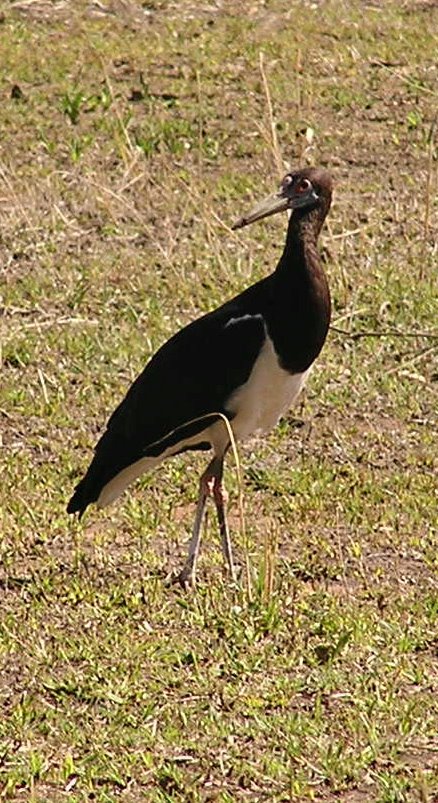
Another sign of slowly advancing disaster is the water level in the mine’s dams. This is a particularly dry part of Tanzania. We have been in the habit of visiting three of the dams that were constructed in the mine area to supply the town of Mwadui in addition to the water requirements for the mining process. During Williamson’s time, Songwa Dam (dam in this instance means man-made lake or reservoir) was turned into a recreation area with the addition of a sailing club complete with club house, boats, imported water fowl and fish. In each location, one can walk out into the basin of the dam quite some distance. Dam walls that should be barely containing the deluge of water are exposed and dry. The dam overflows and natural wash aways or seasonal rivers that would normally be running with water at this time are dry with well trodden footpaths running through them towards the puddles that remain inside the dams themselves. The flocks of migratory birds that come to enjoy the usual seasonal abundance of water are here. We’ve seen flocks of spoonbills, open billed storks, ducks and geese of several varieties and, ironically, so-called “rain birds” a type of stork that comes with the rainy season. Unfortunately, their picturesque presence standing in the centre of the Alamasi Dam is a sign of the times – the water barely comes up to their knees. Their numbers put the water purification systems to the test as they can be seen to contaminate the little supplies we have left.

In the wider picture, the newspapers and television news are full of ominous stories. Power cuts will soon be more prolonged and frequent due to the reduced capacity of the hydro turbines that power the national grid. Without power and water the rest of the struggling industry in this poor country will be under more strain. Animals in the national parks are dying due to lack of water, putting tourist dollars at risk. Even the route of the great migration of wildebeest and zebra has been affected. The herds are off course, gathering and staying at water points that are not usually on their itinerary and competing with human communities for water supplies. Animals are going longer between these oases and the less hardy are suffering and dying. To some this is a tragedy, to others it is a part of a natural cycle. If blame is to be apportioned, deforestation often appears at the top of the list, followed by global warming and the continued effects of the ElNino/ElNina weather pattern.

It is not only Tanzania that is suffering this drought. It appears to be a regional phenomenon, affecting the micro and macro economics of countries and the entire region. It is two weeks since I began writing this missive. We have had no rain since the glorious shower that inspired me to begin writing in the first place. Almost daily, the wind rises, clouds gather and thunder rumbles promisingly but nothing falls. The people here, like their fellow subsistence farmers in Malawi and in Uganda seem to prefer not to discuss the rain, or when it might come. They are stoic, literally going the extra distance to water livestock and fulfill their meager household needs until it falls and then they rejoice in the relief it brings.

Sunday, January 01, 2006

Tanzanian Tales III: Happy Holidays

Those who have been reading my African dispatches for the past few years are probably getting tired of me starting off my Christmas letter by complaining that it is challenge to generate Christmas spirit in the absence of winter as we experience it in the Northern hemisphere. Not being a skier and disliking ice skating (*gasp* no, say it ain’t so!) as I do, Christmas time is really the only time that I actually find myself missing snow and ice as the seasonal markers of the magical time of year that is Christmas for me. I miss the clean, cozy quiet of the world after a big snowfall and the clear, cold blue of the sky when the sun comes out and makes the snow sparkle. I even miss the blast of cold that forces its way into the interior of the house as people arrive stamping the snow off heavy boots and finding places to hang coats, hats, scarves and gloves. Somehow all these things represent and inspire in me the warmth and good cheer of Christmas.

This is now the fourth Christmas that I have celebrated in Africa and the third African country where I have been living when the blessed day came and went. Each year as I have struggled to find my Christmas spirit in the absence of familiar surroundings and loved ones, I have also found ways to bring some of my comfortable traditions to each place and share new experiences with the family that we have made and the wonderful friends that we have found.

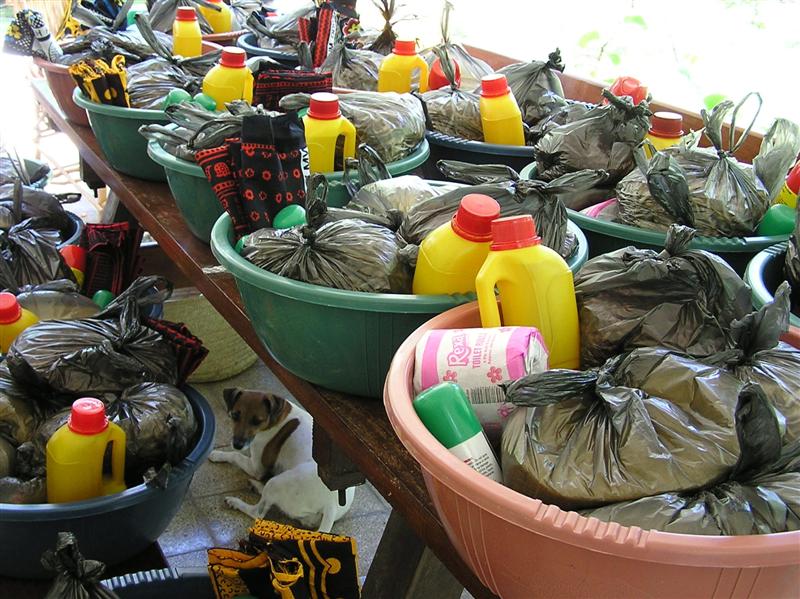
This year, we started the celebrations a week early with a Christmas hamper gift ceremony at one of the Mwadui churches. One of the muzungu (white, foreign) ladies of the mine attends a church close by her house throughout the year with her husband. It is a typically lively African congregation that uses a bare-bones hall as their church building, filling the space with song and praise several days a week in order to support its members in a Christian way of life. In an effort to give back to a spiritual community that had been so welcoming, Margaret decided that she wanted to do a Christmas hamper project. Early in November, the Church elders were tasked to make a list of needy families. They outdid themselves by inviting elderly and infirm Mwadui residents that are not necessarily regular members of their church to the Saturday morning ceremony to distribute the hampers. Meanwhile, some of the other ladies of the mine got involved and made a collection of money, excess items like bug spray, toilet paper and soap as well as used clothes. The cash was spent on washing basins which served as the containers for the beans, rice, bread flour, maize flour, tea, sugar, washing powder, sweets, kapenta (dried fish), cooking oil and salt which were also on the list. Margaret reported that the shopping was a memorable experience as the money collected for such a good cause seemed to be multiplying in her pocket like the proverbial loaves and fishes. Not only did they buy plenty of each of the items on the list but the cash stretched to afford kanga fabrics for each recipient as well as more sweets and still there was some small change left over. Of course this went in the collection basket at the Church. We all got together on the Wednesday before the ceremony to divide the items into the basins which were then wrapped in the gaily coloured fabrics. Surprisingly, this is the first time in living memory that such a thing has been done in Mwadui. Plans are underway to make sure that it is not the last.


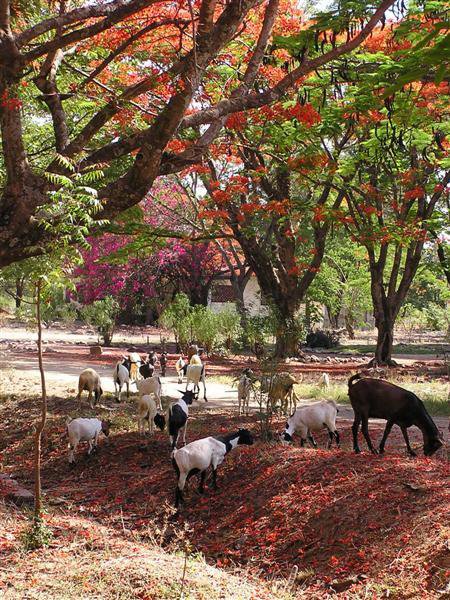
After such a feel-good start to my Christmas week, I couldn’t help but get in the mood. As Simon and I did our morning walks I found myself looking at Mwadui with new eyes. The last of the blossoms on the flame trees and the ever blooming bougainvillea were suddenly happy reminders of the twinkling lights of the season in Canada. I busied myself with baking and crafting and managed to take on hosting the weekly mine ladies’ tea in my house for the first time since we arrived on the mine. Presents arrived for Simon from all over and our snail-mail and e-mail inboxes filled with greetings as friends from near and far took the time to say hello. I spent the day on Christmas Eve baking Christmas goodies and preparing for a quiet evening braai/BBQ with another couple at our house. It felt good to fill my home with some of the fragrances that I associate with Christmas. While we didn’t get a tree to decorate, Kobus allowed the new decorations we were given to be hung from a dried seed arrangement that he put together a couple months ago.


At six months, Simon is still a little too young to grasp that it was a different day from any other but he did enjoy tearing at the paper on his gifts on Christmas morning. He also enjoyed the attention from both of us as for once we presented him with paper that we encouraged him to rip up.


Most of the muzungu on the mine left for the holidays but given that the mine production never ceases, some of the senior management of each of the mining companies has to remain behind. Most of these gathered for a Christmas feast. We had pork roasted on a spit along with dishes from each family’s Christmas traditions by the pool in the afternoon. By then, I was back to loving the climate and no longer missing the snow. Simon outdid himself, getting in the pool quite happily and even trying to swim after some of the toys that were floating in the water.

As I get back to finishing this off, it is New Years Day. We had the party here last night so that Simon could sleep in his bed as we celebrated the passing of 2005. We were all outside in the garden enjoying snacks cooked over a fire as the moment arrived. We were comparing the time on watches and cellphones trying to decide if midnight had been and gone already or not. Then the mine’s midnight siren which signals the end of the night shift’s lunch break let us know that Mwadui had officially worked its way into 2006.

So here we are. I hope that everyone has had a happy holiday season and wishing all a very healthy and prosperous 2006. You can expect regular reports on life in Tanzania as the year progresses and I’m hoping to post some of my Malawi newsletters very shortly.

All the best,
Krista

Saturday, November 19, 2005

Tanzanian Tales II: The Meat Market


Market day at Munzi is Thursdays. It appears that it has been a major market since before the advent of industrial infrastructure. The crossroads it inhabits are much more conducive to bike and oxcart traffic which probably make up 95% of the vehicles that go there. Despite the beaten track being just that: a track, the market is one of the biggest I have seen outside of a major city. The town of Munzi lies some 30km from the tarmac/paved road and consists of no more than a row of typical African one roomed shops and service providers lining a couple hundred meters on both sides of a rutted path. There are power wires that we followed into town but we saw no evidence of electricity being in use once we were in the market. Our “cool” drinks came out of cool boxes and unfortunately I failed to get a picture of the bicycle driven butchers’ blades and knife sharpeners.

The market hosts an amazing number and variety of vendors. It is laid out over several hectares of stalls of varying degrees of permanence and solidity. Despite the labyrinth- like layout, the vendors organize themselves into sections by type of wares. The plastic container sellers group themselves into one area. New plastic containers in primary colours are kept to one end while recycled container vendors group towards another end of their particular stretch of land. Each vendor offers roughly the same items but all do brisk business. Throughout the market young men wander around with heavy stacks of plastic bags slung over their shoulders. These can be bought for a few cents at the point of sale of items that require a carrier.

In the clothing and textiles section lengths of cord strung between posts and trees serve to delineate a stall-holder’s space and double as racks for their wares. Piles of used clothing with tags and logos that tell me that they are North American cast offs sit in the centre of these tented booths. Rooting through these ubiquitous piles in African markets has become somewhat of a sport as it has yielded cheap, barely used, name brand treasures on several occasions. In this market, I was impressed at the displays that were made of the kanga fabrics. Women in this part of the world don’t go out in public without wrapping themselves in colourful printed cotton fabrics which have different names in each country I have visited. These fabrics are also used to make a myriad of other things including slings for babies and the increasingly popular Mandela shirts. Here the stiffness of the newly printed materials is used to advantage to create plies of small pyramids of fabric arranged around a treadle sewing machine. Seated at each sewing machine was a tailor or seamstress who will take your order and probably have it ready by the end of the day.

In the fruit and vegetables section, a simple tarp demarks real estate, provides a backdrop to artfully piled tomatoes, onions, pineapples or mangoes and also probably protected the produce as it was transported there. The sellers of traditional medicines build themselves lean-to type stalls with raised platforms to display their wares. They also string up their tarps for shade purposes. Their ancient knowledge is sold along side such things as antique coins, rusted iron gadgets of assorted sizes and unknown use and colourful beads in both glass and plastic. The prepared food vendors have built themselves mud brick huts with iron sheets for roofs. They cook their offerings outside for all to see and smell as they are going by. The shade inside their huts offers relative coolness and perhaps a bench for their customers to sit comfortably while they eat.

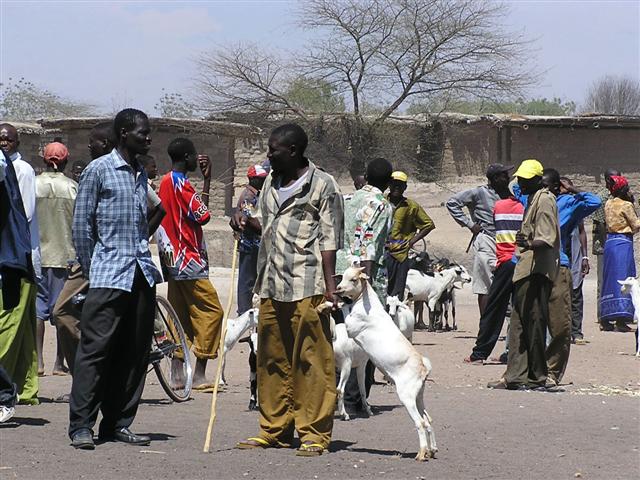
The biggest sections by far in the Munzi market were the areas devoted to the sale of animals and meat. The livestock area was teeming with animals and their handlers. Cattle, sheep and goats were the main offerings. A handler might be responsible for as few as one or two or as many as a dozen or more animals. Impressions in the earth that serve as pens might have been dug manually or were simply worn in by dozens of generations of herds being brought to this place to sell. This is not a place for the faint of heart or a vegetarian. Animals were being rather roughly handled and expertly but painfully penned and otherwise restrained. The cattle in particular sported rather evil yet artful scarification that serves for identification and decoration.

We were after fresh meat -- lamb to be specific. We were given to understand that excellent quality and prices would be worth the drive. Our information on getting there was sketchy: take a left off the road just past a magnificent baobab half way between Mwadui and Shinyanga and keep left. We’d find the market just over a “major” bridge. One flat tyre (or puncture as these events are known around here), one debate over the size of an intervening bridge and an hour to cover the 30km of washboard ridged track and we were there.

We spent about an hour looking around and seeking out an interpreter to help with the negotiation for meat. Our interpreter led us to the butchering section of the market. While the sight that met us was not entirely pleasant to the eyes or nose, it is probably the best place to get fresh meat in this area or in any place where refrigeration (and especially refrigerated transport) is hard to come by. This market’s methods are probably as old as the practice of selling meat at market. Entire freshly butchered carcasses hung from racks made of makeshift poles. Hooves and tails were left on pieces in order to ease identification of the type of meat. The heads and offal meat of the creatures was offered separately on small platforms. To our pleasant surprise, each butchered beast’s lungs, kidneys and liver were inspected by a roving government meat inspector.

With the aid of the interpreter, Kobus negotiated for two sheep to be slaughtered; one to roast whole on a spit and the second to be cut into manageable pieces for the braai (BBQ) or oven. The entire order would cost less than C$30. We adjourned to a bar with a view of the butcheries to have the aforementioned warmish drink and await the preparation of our beasts. It felt like a very civilized and relaxing way of going about one’s shopping.

Unfortunately, the morning ended on a sour note as I fell victim to another of the age old characters of any market – the pickpocket. Kobus had gone to move the truck to an advantageous spot and I wandered after the couple we were with as they followed our interpreter back into the textiles section on a hunt for some Masai blankets. Suddenly I was stopped and quite effectively isolated from my friends by a couple seemingly friendly young men who were interested in looking at my baby. I should have clued in that they were not the usual curious women. As I was distracted by my mothers’ instinct to watch hands reaching for Simon, I felt the hand reach into my pocket and then the culprits were gone with my money, shielded by the fabrics and clothes draped over lines all around us. A crowd gathered a gaped as the muzungu (white foreigner) with the baby stood there and yelled but to no avail. My money was gone, my ego bruised but Simon and I were otherwise fine, which is of course the important thing. In hindsight, I have to admire Simon’s composure as his mother stood amongst a crowd of strangers and completely lost her composure. A few moments of miserable searching and I was back in the supportive and protective company of my husband and friends. The discussion of the event served to divert our attention from the discomforts of the return trip on the rutted path back to the paved road and we were quickly home in Mwadui.

Despite it being a couple weeks since our visit to Munzi market, I have not yet tasted the fruits of our visit so I can not report on the taste of our purchases. The lamb rests in our chest freezer, the bulky packages calling out for an occasion to be sampled. I am quite looking forward to it. Meanwhile, life trips along and we’re all doing fine. Thanks to all for your encouragement and good thoughts. I am most grateful.

Friday, November 04, 2005

Tanzanian Tales I: First Impressions

Below is the first of my newsletters from Tanzania. It joins a collection of newsletters that began in Uganda and continued on to Malawi in an on-going project who's aim is to share my experience of Africa with interested folk around the world. This latest was posted to approximately 150 interested e-mail subscribers on 18 October 2005. Stay tuned for the next post very soon.

Williamson Diamond Mine, Mwadui, Tanzania

Despite several such arrivals in a new country over the past few years, this arrival did not fail to arouse a familiar mixture of anxieties and anticipations. The pleasures and challenges of adjusting to living in a new place are both unique to a location and era of one’s life while also being inevitable consequences of a big move. In this case, anxiety in particular was suddenly compounded as our small internal Tanzanian commuter airplane touched down on Shinyanga’s gravel runway. It was as smooth as possible a landing by an obviously experienced pilot but the less than solid feel of the gravel under the airplane’s landing gear was a new and unsettling experience for me. I’m told it is even more fun when the runway is awash with recent rain. It was however, a real pleasure to get a bird’s eye view of our new home right away as we circled for the landing.

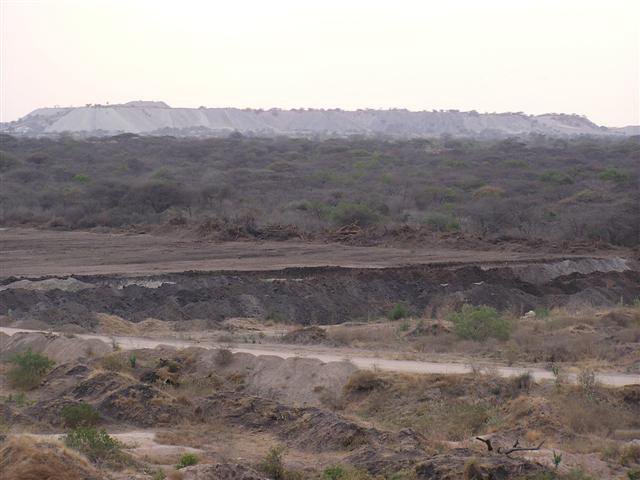
We’ve landed on a rather flat plain where the only topographical feature of note is the chain of mountains that have been raised around the mine. These can be seen from several kilometers away when the dust haze is not too thick. The dune-like hills are the mounds of dirt that have been dug up, sifted and otherwise processed and then piled over the six decades that this mine has been in operation. The older ones are covered in the natural grasses and even some shrubs and trees that are natural to the region.

This area of Tanzania (Shinyanga Province) awaits the rains that will signal the start of the growing season. The landscape is therefore rather barren looking at the moment. The colour palette is predominately drawn from shades of brown. Freshly turned earth of prepared fields tend towards the red end of that spectrum while the dry pans and river beds crack open to reveal greys and blacks.

It may be a rather desolate, dusty time of year but where there is water, life teems. Thanks to regular watering of the plants, our garden is yielding bananas and papaya with which we feed Simon in addition to ourselves. We also have a mango tree which is heavily laden with green fruit. The little green mangoes, which were barely the size of my thumbnail when we arrived a month ago, are now half the size of the palm of my hand and increasing in size almost perceptively day by day. We not only share this produce with the two people who work in the house and the garden but also with the amazing variety of birds and other creatures that populate the yard. Our house is old but open and airy in the typical colonial style of the era and area. It is comfortable but somewhat in need of repair due to some neglect as well as the almost daily earth quake it endures as a result of the blast from on-going mine operations.

So here we are in Mwadui. This is the town that J.T.Williamson built to house the people that work on the diamond mine he established here almost 60 years ago. It is a town full of colonial style buildings and even more history. Each building has a story. There is still a technical mining college in addition to at least 8 other (mostly primary) schools. There are apparently at least as many churches as well. There are tennis and squash courts and a standing up/falling down yacht club beside a man made dam. Williamson stocked the dam with fish and birds he imported for his employees’ pleasure. Many generations later, the fish are feeding the local population of people as well as the descendants of the pelicans and other water birds he brought in. Two little courtyards of small stores that once might have supplied many luxuries now sell basic commodities. The swimming pool by the Managing Director’s house sports a fountain in the shallow end as well as a change rooms with a bar. Williamson’s beautiful stone walled house is connected by an underground tunnel to the (now abandoned) original diamond sort house. The present occupants of the house very kindly showed me around and even pointed out a couple of the wall safes where the notoriously secretive and shrewd Williamson stashed fortunes in diamonds.

The mine “plant” from which issues the mountains of tailings, lakes of “slime” and small packages of diamond concentrate runs 24 hours a day 7 days a week and 362 days a year. It lays down a background noise whose clatter sounds like a freight train passing in the distance. There are two types of mining now going on here. In the original open pit work continues on the main diamond pipe that Williamson discovered. Meanwhile a certain radius of the immediate area is mined for alluvial diamonds that have been washed away from the main pipe over the past million or so years. In alluvial mining, the surface layer of topsoil is methodically removed to expose the second layer of earth which is also removed and processed in much the same way as what is mined from the main pit.

Mwadui is relatively busy compared to other isolated places I have lived in Africa. There is a resident herd of milk cattle that provide us with a daily litre of fresh milk delivered to our door early every morning. We can also buy other basics such as tomatoes and onions and laundry soap in the aforementioned markets. If we get there early enough, the Mwadui bakery might still have a loaf of bread to sell. However, there is no restaurant or grocery store per se. For almost everything aside from beer and “cooldrink” (sodas/pop), we travel to Shinyanga or Mwanza or even further to Dar es Salam.

Shinyanga is our closest town. It boasts a tiny grocery store that caters specifically to the muzungu (white ex-patriots/foreigners) who work on the mine. There we can buy things like fruit juice, chocolate and cheese. Between this provincial capital and the mine is a notorious township called Maganzu. There one can observe the work of local native miners who have bought claims to mine alluvial diamonds that might have washed this far – some 10km or more from the main pipe. The claims appear to be a couple meters square and I imagine that finding even a single gemstone in these tiny plots must be akin to winning the lottery. The principal is the same for alluvial mining within the mine area but here all the work is done by hand. Each tiny pit is ringed by the topsoil that has been removed to expose the second layer. However, these are the legitimate fronts for the illegitimate business that keeps Kobus busy as a mine security manager – illegal diggers on the mine, the so-called “wabeshi.”

The mine area is not fenced but after several generations it can be said that it is generally known who belongs where and who has the right to dig in a place or not. Desperate people come by day and night to try their luck at finding diamonds in both the pit and alluvial mining areas. The layer of earth in question is exposed in these areas, making it rather more likely that there are stones to be found more easily. However, it is dangerous work. The wabeshi most often work under cover of darkness with very little light. They are liable to get caught in cave ins among other hazards, not least of which are disturbing resident spitting cobras or other less than friendly wildlife. They seem to work in groups of a handful to a couple dozen. When they are spotted and chased by roaming guards, they often try to hide in swampy areas where they know the guards won’t follow. Unfortunately, a few have drowned over the past few months. The illegal diggers are not just individuals with a taste for riches that overwhelms their sense of self preservation. They are organized and sent in by diamond dealers who are well known but difficult to catch in the act. Who’s to say that a specific stone came from a legitimate claim or has been filched from someone else’s?

I’m not one to place much store in first impressions. I try to keep an open mind and to find the good in everything for as long as possible. So far this hasn’t been too much of a challenge here. There’s obviously a lot to learn and do around Mwadui if one has but a bit of interest and time. I feel fortunate to have both.

Of course the demands of motherhood are keeping me rather happily busy but it appears that I’ll have lots to write and think about as I get the chance. As always, questions and comments are most welcome and I do try to respond to all personal responses that these newsletters inspire. Thanks to all for your good thoughts and wishes.